Nederlands
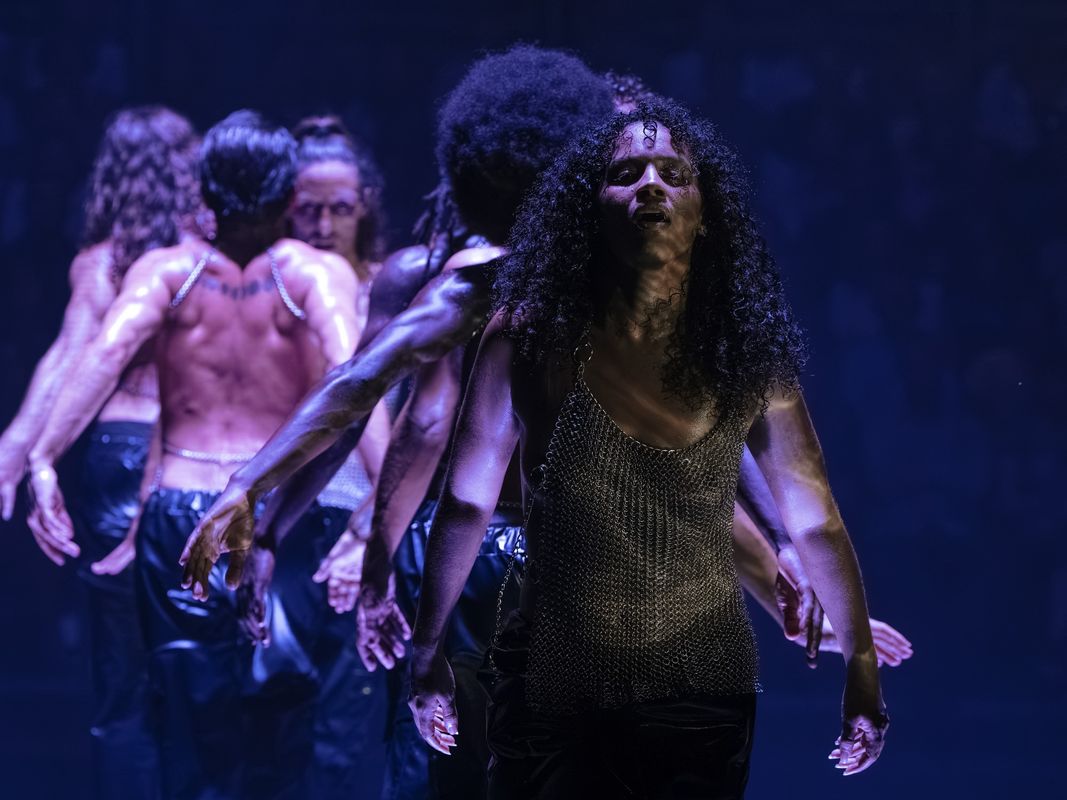
De Portugese choreograaf Marco da Silva Ferreira staat zelf op het podium in zijn nieuwste voorstelling F*cking Future, die naar Theater Rotterdam komt. Samen met een ensemble van acht performers onderzoekt hij nieuwe manieren om samen te komen en in verzet te gaan.
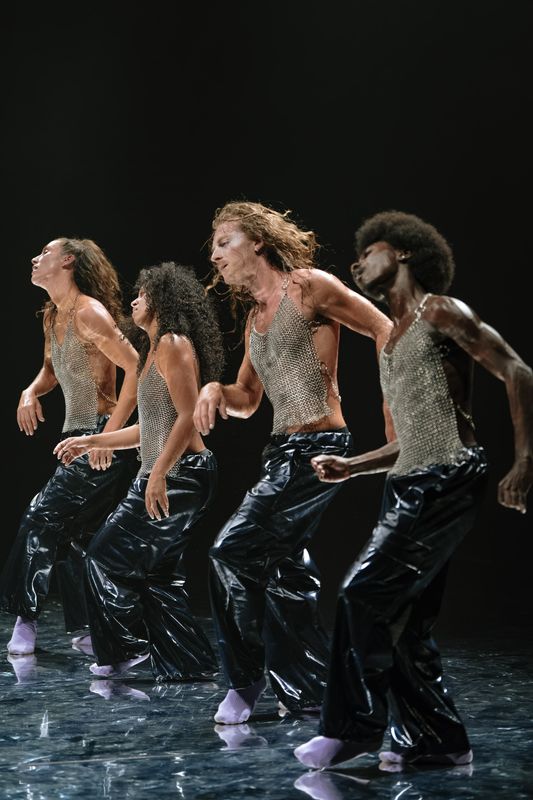
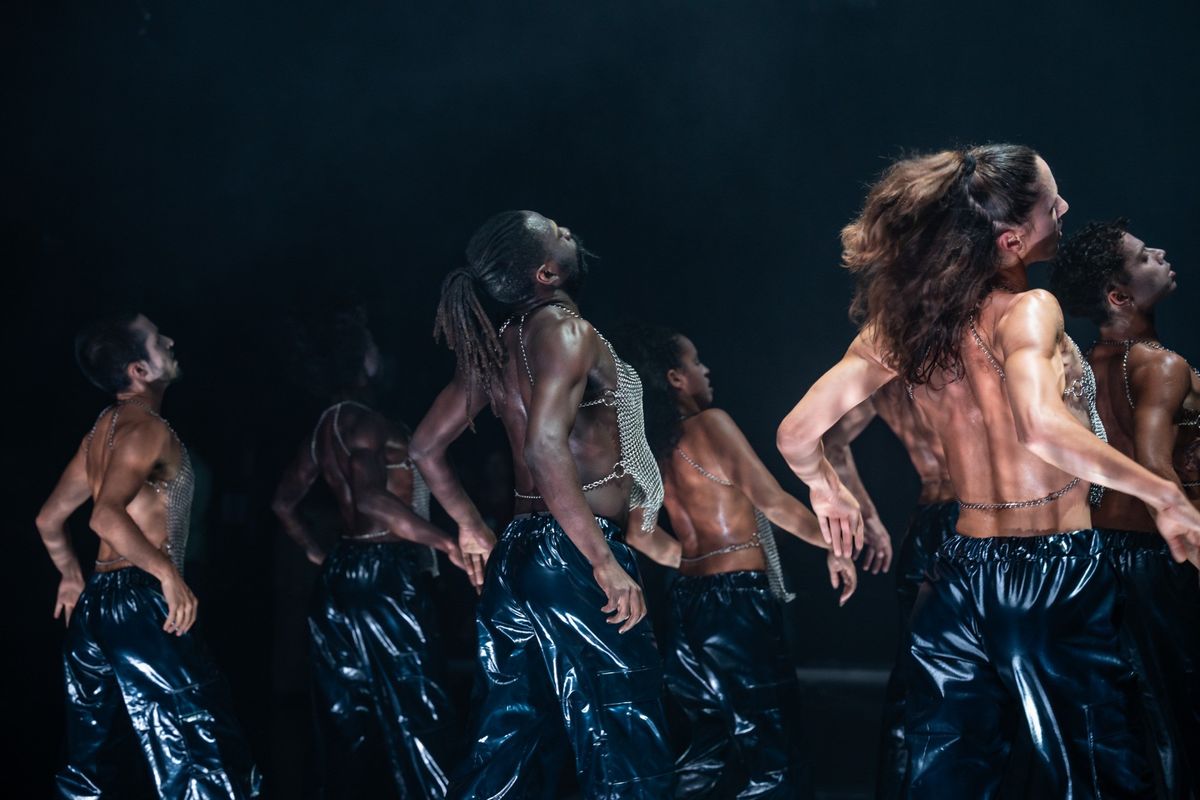
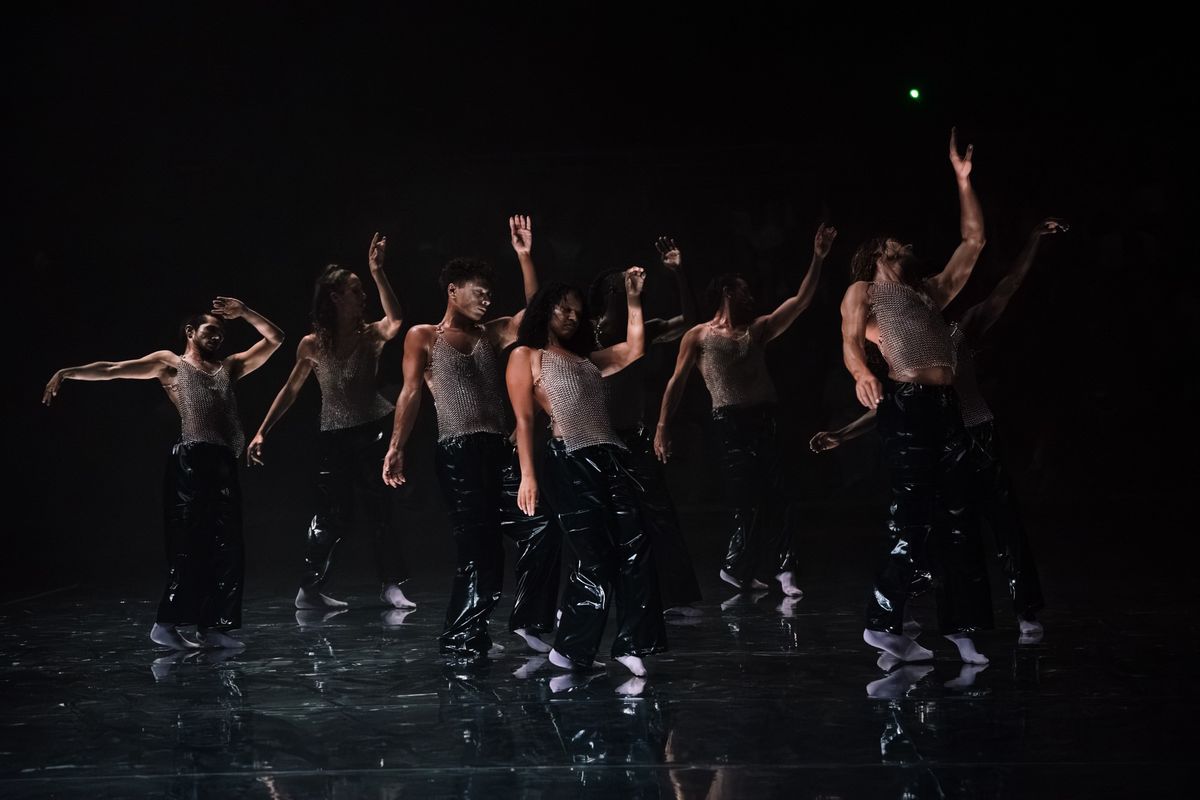
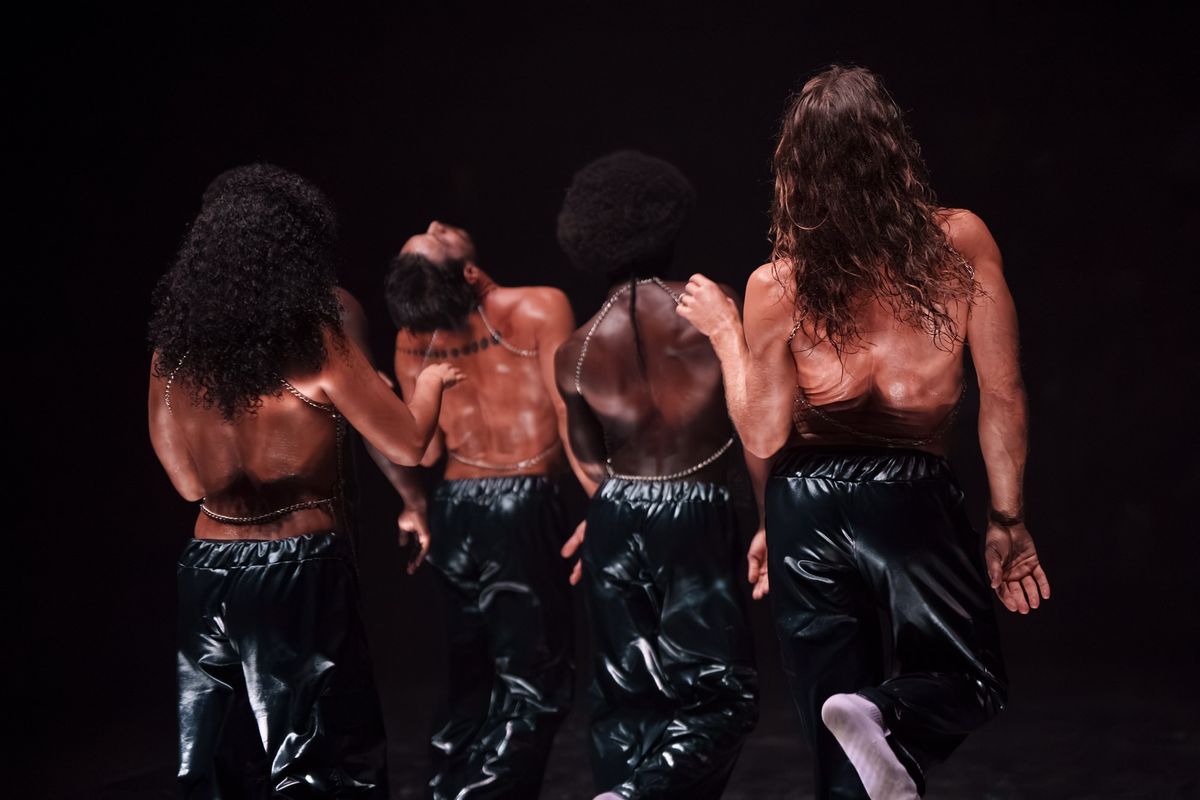
F*cking Future brengt de spanning in beeld tussen strijdlust en militarisering. De voorstelling onderzoekt en bevraagt de systemen die bepalen hoe we ons lichaam gebruiken en hoe we ons gedragen. Op een vierzijdig podium laat een collectief zien hoe het beweegt tussen strakheid en flexibiliteit, tussen discipline en verlangen. Zo zoeken ze naar nieuwe manieren om samen te komen en in verzet te gaan. We blijven hier, en bieden weerstand door in beweging te blijven.
"Tijdens de fraaie openingsvoorstelling F*cking Future verpakt de Portugese choreograaf en danser Marco da Silva Ferreira (...) zijn zorgen over militaire expansie en het inperken van rechten van queers, in een bedwelmend sterk opgebouwd octet." - ★★★★☆ de Volkskrant
"Jazeker: F*cking Future drukt bezwerende, energieke, enerverende, troostrijke dans uit. Zeg maar gerust: danskunst." - Theaterkrant
Over Marco da Silva Ferreira
Marco da Silva Ferreira (1986, Santa Maria da Feira) studeerde af als fysiotherapeut, maar koos uiteindelijk voor dans. Na een achtergrond in topsportzwemmen ontwikkelde hij zich als autodidact in urban en streetdance, beïnvloed door popcultuur en clubscènes. In 2010 won hij So You Think You Can Dance – Portugal en werkte hij als danser met onder anderen Hofesh Shechter en Paulo Ribeiro. In 2026 ontving hij de Chanel Next Prize. Als choreograaf brak hij door met Hu(r)mano (2013) en BROTHER (2016), beide geselecteerd voor Aerowaves. Daarna volgden producties als Bisonte (2019), Corpos de Baile (2020), SIRI (2021), en C A R C A Ç A (2022). Recente werken zijn a folia (2024) en F*cking Future (2025).
F*cking Future choreographs the friction between militancy and militarization, exploring and challenging the systems that shape bodies and behaviors. On a quadrifrontal stage, drawing from those very same systems, a collective marches between rigidity and dilution, discipline and desire, invoking new forms of union and insurgency — we remain here, resisting through movement.
"In the stunning opening performance F*cking Future, Portuguese choreographer and dancer Marco da Silva Ferreira (...) transforms his concerns about military expansion and the erosion of queer rights into a mesmerizing, masterfully constructed octet." - ★★★★☆ de Volkskrant
"Without a doubt: F*cking Future embodies dance that is mesmerizing, energetic, exhilarating and comforting. Simply put: dance at its finest." - Theaterkrant
About Marco da Silva Ferreira
Marco da Silva Ferreira (1986, Santa Maria da Feira) graduated as a physiotherapist but ultimately chose a career in dance. After a background in competitive swimming, he developed himself as a self-taught dancer in urban and street styles, influenced by pop culture and clubbing. In 2010, he won So You Think You Can Dance – Portugal and went on to work as a dancer with, among others, Hofesh Shechter and Paulo Ribeiro. In 2026, he received the Chanel Next Prize.
As a choreographer, he broke through with Hu(r)mano (2013) and BROTHER (2016), both selected for Aerowaves. This was followed by works such as Bisonte (2019), Corpos de Baile (2020), SIRI (2021), and C A R C A Ç A (2022). Recent works include a folia (2024) and F*cking Future (2025).
"We are ghosts. Ghosts of queer warriors who died in war under a system of militarisation. Queer bodies returning as spectres to challenge ideas of masculinity. These are bodies in resistance. But rather than simply saying 'no' to traditional notions of masculinity, I want to offer something I can say 'yes' to."
The performers' individual physiques and diverse dance backgrounds – ranging from hiphop and contemporary to flamenco, clubdance and Angolan kuduro – create subtle, and at times striking, differences in energy and movement quality. For one performer, a sudden contraction of the torso resembles a classic contemporary dance contraction; for another, it reads as a hip-hop pop; for yet another, as an abrupt shoulder hit.
Read full interview by NRC